January 12, 2012

Хэн зохиосон юу одоо бүү мэд, их инээдтэй бөгөөд үнэн бас хорон үгтэй шүлэг байна. Дээр нэг явж байгаад FB дээр харсан юм, google ухаж байж дахиж оллоо.

Харанхуй club-т хар шил зүүчихээд
Хөгжмийн хэмнэлээс зөрж хөдлөөд
Халууцаж байж хар савхиа тайлахгүй
Хараад байхад худлаа байнаа залуу минь
Цагаан сорочканыхаа захыг босгочихоод
Цааш нааш хэлбэрдэж алхаад
Тамхи татна гэж тоглолт үзүүлээд л
Танихгүй ч гэсэн өмнөөс чинь ичээд байнаа
Хаа сайгүй өлөн нүдээ бэлчээж
Хэнээс ч хамаагүй секс гуйгаад
Утсаа ломбардаад буудал босгож
Үнэндээ нэг л өлөн санагдаад байна аа
Охидын ширээ дамжиж дунд хуруугаар шагнагдаад л
Онцолж чамайг л харлаа гэж хүүхэн бүрт шивнээд л
Сүүлийн найдвар гээд taxi-тай үүд манаад л
Сэргэ л дээ залуу минь, сэрэл юугаан дар
Арван сантеметрийн дээр сайхан хүүхэн болчих мэт
Алхаж гишгиж чадахгүй байж бүжгийн талбайд доёгоноод
Янхан будалтаа бүдэг гэрлээр чимээд л
Яриа алгаа охин минь, хямдхан санагдаад байна
Тоож харахгүй болохоор түлхэж анхаарал татаад
Тогтоод хааяа харахаар бэлэн гэдгээ илчлээд
Хулхи сүрчигээ хамар цоргитол ханхлуулж
Хэрэггүй дээ охин минь савхитай залууруу оч
Труба тавиад өгвөл тайчих урлаг заачих гээд л
Түрийвч зузаан нэгнийг төрсөн биеэрээ шагнах гээд л
Биеэ үнэлэгчийн курсыг онц төгссөн чамд
Би ч юугаа хэлэхэв дээ

Posted on Thursday, January 12, 2012 by Amar Baatartsogt

No comments

October 31, 2011

A Sister’s Eulogy for Steve Jobs
By MONA SIMPSON
Source: New York Times

I grew up as an only child, with a single mother. Because we were poor and because I knew my father had emigrated from Syria, I imagined he looked like Omar Sharif. I hoped he would be rich and kind and would come into our lives (and our not yet furnished apartment) and help us. Later, after I’d met my father, I tried to believe he’d changed his number and left no forwarding address because he was an idealistic revolutionary, plotting a new world for the Arab people.
Related

Even as a feminist, my whole life I’d been waiting for a man to love, who could love me. For decades, I’d thought that man would be my father. When I was 25, I met that man and he was my brother.

By then, I lived in New York, where I was trying to write my first novel. I had a job at a small magazine in an office the size of a closet, with three other aspiring writers. When one day a lawyer called me — me, the middle-class girl from California who hassled the boss to buy us health insurance — and said his client was rich and famous and was my long-lost brother, the young editors went wild. This was 1985 and we worked at a cutting-edge literary magazine, but I’d fallen into the plot of a Dickens novel and really, we all loved those best. The lawyer refused to tell me my brother’s name and my colleagues started a betting pool. The leading candidate: John Travolta. I secretly hoped for a literary descendant of Henry James — someone more talented than I, someone brilliant without even trying.


PPost Before “read more”When I met Steve, he was a guy my age in jeans, Arab- or Jewish-looking and handsomer than Omar Sharif.

We took a long walk — something, it happened, that we both liked to do. I don’t remember much of what we said that first day, only that he felt like someone I’d pick to be a friend. He explained that he worked in computers.

I didn’t know much about computers. I still worked on a manual Olivetti typewriter.

I told Steve I’d recently considered my first purchase of a computer: something called the Cromemco.

Steve told me it was a good thing I’d waited. He said he was making something that was going to be insanely beautiful.

I want to tell you a few things I learned from Steve, during three distinct periods, over the 27 years I knew him. They’re not periods of years, but of states of being. His full life. His illness. His dying.

Steve worked at what he loved. He worked really hard. Every day.

That’s incredibly simple, but true.

He was the opposite of absent-minded.

He was never embarrassed about working hard, even if the results were failures. If someone as smart as Steve wasn’t ashamed to admit trying, maybe I didn’t have to be.

When he got kicked out of Apple, things were painful. He told me about a dinner at which 500 Silicon Valley leaders met the then-sitting president. Steve hadn’t been invited.

He was hurt but he still went to work at Next. Every single day.

Novelty was not Steve’s highest value. Beauty was.

For an innovator, Steve was remarkably loyal. If he loved a shirt, he’d order 10 or 100 of them. In the Palo Alto house, there are probably enough black cotton turtlenecks for everyone in this church.

He didn’t favor trends or gimmicks. He liked people his own age.

His philosophy of aesthetics reminds me of a quote that went something like this: “Fashion is what seems beautiful now but looks ugly later; art can be ugly at first but it becomes beautiful later.”

Steve always aspired to make beautiful later.

He was willing to be misunderstood.

Uninvited to the ball, he drove the third or fourth iteration of his same black sports car to Next, where he and his team were quietly inventing the platform on which Tim Berners-Lee would write the program for the World Wide Web.

Steve was like a girl in the amount of time he spent talking about love. Love was his supreme virtue, his god of gods. He tracked and worried about the romantic lives of the people working with him.

Whenever he saw a man he thought a woman might find dashing, he called out, “Hey are you single? Do you wanna come to dinner with my sister?”

I remember when he phoned the day he met Laurene. “There’s this beautiful woman and she’s really smart and she has this dog and I’m going to marry her.”

When Reed was born, he began gushing and never stopped. He was a physical dad, with each of his children. He fretted over Lisa’s boyfriends and Erin’s travel and skirt lengths and Eve’s safety around the horses she adored.

None of us who attended Reed’s graduation party will ever forget the scene of Reed and Steve slow dancing.

His abiding love for Laurene sustained him. He believed that love happened all the time, everywhere. In that most important way, Steve was never ironic, never cynical, never pessimistic. I try to learn from that, still.

Steve had been successful at a young age, and he felt that had isolated him. Most of the choices he made from the time I knew him were designed to dissolve the walls around him. A middle-class boy from Los Altos, he fell in love with a middle-class girl from New Jersey. It was important to both of them to raise Lisa, Reed, Erin and Eve as grounded, normal children. Their house didn’t intimidate with art or polish; in fact, for many of the first years I knew Steve and Lo together, dinner was served on the grass, and sometimes consisted of just one vegetable. Lots of that one vegetable. But one. Broccoli. In season. Simply prepared. With the just the right, recently snipped, herb.

Even as a young millionaire, Steve always picked me up at the airport. He’d be standing there in his jeans.

When a family member called him at work, his secretary Linetta answered, “Your dad’s in a meeting. Would you like me to interrupt him?”

When Reed insisted on dressing up as a witch every Halloween, Steve, Laurene, Erin and Eve all went wiccan.

They once embarked on a kitchen remodel; it took years. They cooked on a hotplate in the garage. The Pixar building, under construction during the same period, finished in half the time. And that was it for the Palo Alto house. The bathrooms stayed old. But — and this was a crucial distinction — it had been a great house to start with; Steve saw to that.

This is not to say that he didn’t enjoy his success: he enjoyed his success a lot, just minus a few zeros. He told me how much he loved going to the Palo Alto bike store and gleefully realizing he could afford to buy the best bike there.

And he did.

Steve was humble. Steve liked to keep learning.

Once, he told me if he’d grown up differently, he might have become a mathematician. He spoke reverently about colleges and loved walking around the Stanford campus. In the last year of his life, he studied a book of paintings by Mark Rothko, an artist he hadn’t known about before, thinking of what could inspire people on the walls of a future Apple campus.

Steve cultivated whimsy. What other C.E.O. knows the history of English and Chinese tea roses and has a favorite David Austin rose?

He had surprises tucked in all his pockets. I’ll venture that Laurene will discover treats — songs he loved, a poem he cut out and put in a drawer — even after 20 years of an exceptionally close marriage. I spoke to him every other day or so, but when I opened The New York Times and saw a feature on the company’s patents, I was still surprised and delighted to see a sketch for a perfect staircase.

With his four children, with his wife, with all of us, Steve had a lot of fun.

He treasured happiness.

Then, Steve became ill and we watched his life compress into a smaller circle. Once, he’d loved walking through Paris. He’d discovered a small handmade soba shop in Kyoto. He downhill skied gracefully. He cross-country skied clumsily. No more.

Eventually, even ordinary pleasures, like a good peach, no longer appealed to him.

Yet, what amazed me, and what I learned from his illness, was how much was still left after so much had been taken away.

I remember my brother learning to walk again, with a chair. After his liver transplant, once a day he would get up on legs that seemed too thin to bear him, arms pitched to the chair back. He’d push that chair down the Memphis hospital corridor towards the nursing station and then he’d sit down on the chair, rest, turn around and walk back again. He counted his steps and, each day, pressed a little farther.

Laurene got down on her knees and looked into his eyes.

“You can do this, Steve,” she said. His eyes widened. His lips pressed into each other.

He tried. He always, always tried, and always with love at the core of that effort. He was an intensely emotional man.

I realized during that terrifying time that Steve was not enduring the pain for himself. He set destinations: his son Reed’s graduation from high school, his daughter Erin’s trip to Kyoto, the launching of a boat he was building on which he planned to take his family around the world and where he hoped he and Laurene would someday retire.

Even ill, his taste, his discrimination and his judgment held. He went through 67 nurses before finding kindred spirits and then he completely trusted the three who stayed with him to the end. Tracy. Arturo. Elham.

One time when Steve had contracted a tenacious pneumonia his doctor forbid everything — even ice. We were in a standard I.C.U. unit. Steve, who generally disliked cutting in line or dropping his own name, confessed that this once, he’d like to be treated a little specially.

I told him: Steve, this is special treatment.

He leaned over to me, and said: “I want it to be a little more special.”

Intubated, when he couldn’t talk, he asked for a notepad. He sketched devices to hold an iPad in a hospital bed. He designed new fluid monitors and x-ray equipment. He redrew that not-quite-special-enough hospital unit. And every time his wife walked into the room, I watched his smile remake itself on his face.

For the really big, big things, you have to trust me, he wrote on his sketchpad. He looked up. You have to.

By that, he meant that we should disobey the doctors and give him a piece of ice.

None of us knows for certain how long we’ll be here. On Steve’s better days, even in the last year, he embarked upon projects and elicited promises from his friends at Apple to finish them. Some boat builders in the Netherlands have a gorgeous stainless steel hull ready to be covered with the finishing wood. His three daughters remain unmarried, his two youngest still girls, and he’d wanted to walk them down the aisle as he’d walked me the day of my wedding.

We all — in the end — die in medias res. In the middle of a story. Of many stories.

I suppose it’s not quite accurate to call the death of someone who lived with cancer for years unexpected, but Steve’s death was unexpected for us.

What I learned from my brother’s death was that character is essential: What he was, was how he died.

Tuesday morning, he called me to ask me to hurry up to Palo Alto. His tone was affectionate, dear, loving, but like someone whose luggage was already strapped onto the vehicle, who was already on the beginning of his journey, even as he was sorry, truly deeply sorry, to be leaving us.

He started his farewell and I stopped him. I said, “Wait. I’m coming. I’m in a taxi to the airport. I’ll be there.”

“I’m telling you now because I’m afraid you won’t make it on time, honey.”

When I arrived, he and his Laurene were joking together like partners who’d lived and worked together every day of their lives. He looked into his children’s eyes as if he couldn’t unlock his gaze.

Until about 2 in the afternoon, his wife could rouse him, to talk to his friends from Apple.

Then, after awhile, it was clear that he would no longer wake to us.

His breathing changed. It became severe, deliberate, purposeful. I could feel him counting his steps again, pushing farther than before.

This is what I learned: he was working at this, too. Death didn’t happen to Steve, he achieved it.

He told me, when he was saying goodbye and telling me he was sorry, so sorry we wouldn’t be able to be old together as we’d always planned, that he was going to a better place.

Dr. Fischer gave him a 50/50 chance of making it through the night.

He made it through the night, Laurene next to him on the bed sometimes jerked up when there was a longer pause between his breaths. She and I looked at each other, then he would heave a deep breath and begin again.

This had to be done. Even now, he had a stern, still handsome profile, the profile of an absolutist, a romantic. His breath indicated an arduous journey, some steep path, altitude.

He seemed to be climbing.

But with that will, that work ethic, that strength, there was also sweet Steve’s capacity for wonderment, the artist’s belief in the ideal, the still more beautiful later.

Steve’s final words, hours earlier, were monosyllables, repeated three times.

Before embarking, he’d looked at his sister Patty, then for a long time at his children, then at his life’s partner, Laurene, and then over their shoulders past them.

Steve’s final words were:

OH WOW. OH WOW. OH WOW.


Mona Simpson is a novelist and a professor of English at the University of California, Los Angeles. She delivered this eulogy for her brother, Steve Jobs, on Oct. 16 at his memorial service at the Memorial Church of Stanford University. And here is the rest of it

Posted on Monday, October 31, 2011 by Amar Baatartsogt

No comments

October 11, 2011

Posted on Tuesday, October 11, 2011 by Amar Baatartsogt

1 comment

Posted on Tuesday, October 11, 2011 by Amar Baatartsogt

1 comment

September 27, 2011

Эр хүн гээд чиний хойноос үргэлж гүйх ёстой юм уу
Эр хүн гээд заавал чамайг гуйх ёстой юм уу
Эр хүн болхоор л чинийхээр байх ёстой юм уу
Эр хүн болхоор л эхэлж сэтгэлээ илчлэх ёстой юм уу

Би эр хүн гээд шаналалыг үзэж тэвчих ёстой юм уу
Бид эрчүүд гээд бүсгүй танд тохируулах ёстой юм уу
Бас эр хүн гэхээр л уйлж болохгүй юу
Бараа таваар шиг биднээс сонгох ёстой юу

Эрчүүд гэхээр л эрээ цээргүй байх ёстой юм уу
Эр хүн гэхээр л эрхэлж болдоггүй юм уу
Эр хүн гээд илбэчин шиг бүхнийг бүтээх үү
Эрэгтэй хүн гээд сэтгэлээр нь тоглох болох уу

Бид ч гэсэн зүрх сэтгэлтэй бие мах бодь
Барлаг болсонч сэтгэлээ хувиргадаггүй
Бид эр хүн гээд эрхэлхийг хүсдэггүй биш
Бид эр хүн гээд уйлахгүй байж чаддаг юм биш

Балчир байхаасаа л эр нь гэж хатууг хийдэг
Бадарчин болж балаг тарьсан ч сэтгэл нь өвддөг
Бүсгүй таны төлөө өөрийгөө ч умартдаг юм
Бүтэн нойртой хоног цөөхөн байдаг юм бидэнд......

Author, unknown...
via Javkhlan

Posted on Tuesday, September 27, 2011 by Amar Baatartsogt

No comments

September 19, 2011

The following article is written by Amar Baatartsogt for 976 Magazine.


Before all this “Rare Earth Saga” started last September, only a handful of people actually knew about the existence of it. Today, it is a hot global media topic, an international mining investment trend and most importantly the key ingredient to a greener and better future.So how did the storyline begin in the first place?

On September, 7 2010, a Chinese fishing boat collided with a Japanese Coast Guard patrol and the crew was held in custody pending possible charges. On the same day, China showed the world that they are the new global “bully”. China demanded for immediate release of the crew. All rare earth shipments to Japan were stopped soon after the incident. The Chinese government denied of such actions. It was an unannounced ban, an embargo – at least that’s how the rest of the world perceived the situation. With the strong opposition from the Chinese government and with the need of the rare earth shipments, Japan had no option but to release the crew only after a week. The release of the crew did not resume the shipments and it took another two months for China to restart the shipments to Japan. For the Japanese high-tech industries this action was a major threat which brought great uncertainty and fear. Japan finally realized that they cannot be dependent on China on its most crucial industrial raw material – rare earth elements.

Rare earth elements, perhaps which are more correctly referred to as lanthanides after lanthanum (atomic number 57) the first element in the series of 15 elements. The first rare earth element – yttrium was discovered in 1787. Through the early 1940s, these elements were largely a chemist's curiosity. But then US chemist Frank Spedding figured out a way to separate and purify rare earth elements. Twenty years later, researchers began discovering their usefulness. What makes rare earth elements special is that these elements are a group of materials that have unique electrical, magnetic, fluorescent and thermal properties that make them indispensable in the manufacturing of many “modern day living” such as laptops, LCDs, auto catalysts, energy efficient lighting and hybrid vehicles. Yttrium and scandium, which are also chemically similar to lanthanides, are also included in the family of rare earth elements, taking the total to 17.

Without these 17 elements on the Mendeleev periodic table, one would have to imagine a world without cell phones, flat screen TVs or even jet engines. Let me put it this way. You, Mr. Consumer, would have lived in a world without mobile connectivity where it is just not possible to call your little girl or your lovely fiancée anytime you want. You, Mr. Consumer, would have lived in a world with no laptops and color TVs where portable technology and entertainment are just mere words. And yes, You, Mr. Consumer, would have lived in a world that offers not-that-reliable civil aviation where flying could be on the list of “10 crazy things you should do before you die”. Without the 17 elements, most of our mainstays of modern life just wouldn't be possible.


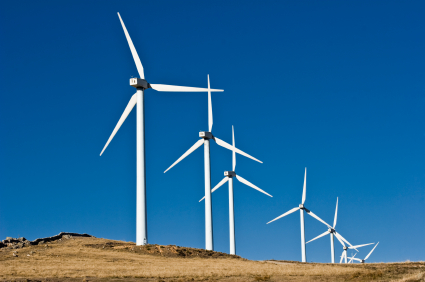
The importance of rare earth elements is not only limited to consumer based products. It is also the basis of “enabler technologies” such as superconductors, lasers and imaging systems, while rare earth metals are mainly used to improve the performance of permanent magnets, catalysts (emission control systems) and rechargeable batteries. Rare earth metals are vital to the technology of Wind Turbine Power Generator, or simply known as wind turbine which is seen to be the key technology in reducing carbon emissions along with other green renewable energy technologies. Rare earth elements are categorized as strategically important in some of the developed nations for a different reason – national security. According to the U.S Department of Defense, rare earth elements are used in the production of number of missiles including the deadly Tomahawk cruise missile, radar surveillance systems, Abrams M1A1 Tanks and F15 Fighter Jets etc. Rare earth elements are undoubtedly important, so what’s the fuss about? The problem is China in four words: single source of supply. Today, almost 97% of the world’s rare earth supply comes solely from China and out of that, about 95% is extracted at Bayan-Obo mine, the largest deposit known up to date, in Baotou (Mongolian: Бугат), Inner Mongolia. The Bayan-Obo deposit lies only 80 kilometers outside of the Southern border of Mongolia. It is estimated that the deposit accommodates over 300 million tonnes of rare earth oxide ore with an average grade of 1.5% (this means only 1.5% of the total deposit is actual rare earth oxide and the rest is earth’s crust) Single source of supply is not a new idea and definitely not a new concern. The issue has been simmering for the past decade or so. Even prior to the discovery of Bayan-Obo, Mountain Pass deposit in California, United States was the monopolistic supplier of rare earth. But the new wrinkle "is the prospects of an explosion in demand for certain relatively obscure elements for new clean-energy technologies," says Roderick Eggert, a minerals economist at the Colorado School of Mines in Golden.


According to Credit Suisse, a major global financial services company, the overall rare earth market was barely 1.3 billion USD in 2008 with a total volume of 124 thousand tonnes, which was equivalent to only 6% of the copper market that year. This is because minimal amount of rare earth is required, but necessary to produce various high tech devices. However, market forecast shows a promising estimate that global consumption will increase to 220 thousand tonnes by 2012, a 77% increase from 2008. On the supply side, Chinese export quotas crimped worldwide industries and as a result, prices have climbed sevenfold in the last six months for cerium oxide, which is used for polishing semiconductors, and other elements have more than doubled, according to Metal-Pages Ltd. in London, which tracks rare-earth prices. Actions by China have drawn criticism from U.S. lawmakers and officials in Japan and Germany. Bloomberg reported that China reduced its second-half export quota for the minerals by 72 percent in July.

Chinese control of the base of the rare earth supply chain has increasingly made China the go-to location for the intermediate goods made from rare earth elements. As new rare earth supplies cannot be brought online overnight, China will enjoy a very powerful position at least in the short term. Mount Weld deposit in Australia is planning to begin production in late 2011, which will become the first major supplier of rare earth outside of China. The re-establishment of the Mountain Pass deposit follows with a few others. Even with all the new suppliers marching into the rare earth market in the upcoming years, it will still be hard to keep up with the rapidly increasing demand.

Multinational corporations and countries that have significant stake in rare earth related industries have already started pursuing new investments opportunities at new locations. This is where Mongolia came into the picture along with other emerging nations in the quest to finding the “treasure chest”. Ever since the China-Japan dispute, Mongolia has been an international focus regarding the rare earth sector. On October, 2 2010 Japanese Prime Minister Naoto Kan and Mongolian Prime Minister Sukhbaatar Batbold agreed on to cooperate in promoting projects to develop rare earth minerals in Mongolia as it seeks to diversify sources of materials needed for high-tech products during a meeting in Tokyo. "Development of mine resources in resource-rich Mongolia will benefit both countries. Our country's research team will launch exploration of rare metals this month," Mr. Kan said during the meeting. Japan expressed strong interest to help Mongolia look for rare earth elements and other metals with its technologies under the agreement. Not long after, Mr. Kan met Elbegdorj Tsakhia, the President of Mongolia, and furthermore agreed to build a strategic partnership and to secure mutually beneficial cooperation in developing various mineral resources in Mongolia.


After the Second World War, the Soviet Union started extensive explorations within its satellite countries as well as Mongolia with the ambitious goal to discover major uranium deposits. Currently there are over 60 registered rare earth occurrences in Mongolia, all of which were discovered during these explorations as a byproduct. However, these explorations mainly covered Southern and Western Mongolia while the remaining parts are mostly untapped and unexplored. It is believed among experts that Mongolia has some potential to become the next major “rare earth player” in the global market. There are 4 deposits in Mongolia known up to date. The largest one out of the 4 deposits is the Mushgia Khudag deposit, located in the Omnogobi province. It is estimated to have around 200 million tonnes of rare earth oxide ore with an average grade of 1.5%, which is comparable in size to the Bayan-Obo deposit in Inner Mongolia. Khotgor, the second largest deposit is expected to deliver another 200 million tonnes of rare earth ore at a lower average grade of 0.7%. The remaining 2 deposits are also estimated to be respectable in size.

It is still a couple of years away before any rare earth production starts in Mongolia and there are a few roadblocks that the government has to maneuver through. First of all, rare earth deposits aren’t even considered to be strategic yet in Mongolia. With no doubt the status will become “strategic” and as a consequence there will be a lot of changes at different levels. Secondly, there is no existing legal framework “tailored” for rare earth elements. It is necessary to have one because rare earth elements will need “special care” – a different type of approach compared to bulk commodity mining. The development of a new legal framework will be time consuming and investors will not start spending big money until everything is in the right place. Apart from it, there is another, probably a more sensitive side to the whole rare earth story. Despite their name, rare earth elements are actually not so rare. According to US Geological Survey (USGS), at the current consumption rates, the total rare earth reserves will represent a comfortable life expectancy of nearly 800 years. However, their extraction and production are rather expensive due to their similar chemical properties and their tendency to mix with each other. Not only it is expensive but also rare earth extraction is one of the most environmentally unfriendly processes in the mining industry. The Mountain Pass mine in California, once the dominant producer of world’s rare earth elements, was closed down due to environmental reasons. Due to the radioactive nature of the rare earth ores, the waste water was a serious problem with Mountain Pass. On the other hand, extracting a small amount of rare earth requires digging and moving vast amounts earth’s crust. Some people believe that the reason China started imposing export quotas is partially because of the environmental issues they were facing. Whatever the reason is, with Mongolia already heavily suffering from extreme climate change and improper mining activities, there will be one question that need be answered: All these potential rare earth in Mongolia – a blessing or a curse?

Posted on Monday, September 19, 2011 by Amar Baatartsogt

1 comment

July 26, 2011


I was surprised to learn that one of my good friends, who over the past couple of months has been in "hibernation" mode, unveiled that he will become a dad in 6 months time. You have grown to be a serious and responsible man, being a dad is wonderful yet challenging. Proud of you man. Another wedding to attend, another new life to begin.

However, before that news hit my ears, I attended the wedding of my two former classmates. Beautiful couple. Adorable daughter. We are growing up, getting older day by day.

Most of the pictures I took at the wedding ended up being simply horrific as I am stilled not fully used to the new Nikon D5100 I bought a few weeks ago. Most pictures are over exposed. I'll figure out.

Best wishes for the Newly Weds.

Best wishes on your way to becoming a Dad.


Posted on Tuesday, July 26, 2011 by Amar Baatartsogt

1 comment

July 24, 2011

I came home just after midnight, thinking maybe I should figure out something to bite. As always, laziness being my absolute "virtue" I quickly decided to lay down on the sofa in the living room and turned on the TV. Over the past two months I think the total time I spent watching TV is probably no more than 3 hours. Here are the highlights: A movie which looked like a MILF version of Gossip Girls. I failed to remember the name of the lead actress /w a gentle smile, which I was forced to do some creative google search. It was Meg Ryan and the movie was The Women. Quite sure it decapitated a few brain cells of mine. Then I was excited to see Mr. James Bond fighting polar bears.

/Can you guess the name of the Movie? James Bond, Polar Bears, Magical world.../

That was some fun. By now, the mere thought of having some bite turned into something grander, and yes I was ready to eat a fucking horse. So I started making some eggs, bacon and toast in my underwear at 2 am. Felt like one of those the good old college days.

All this was quite different from where I was shooting some hoops on the beach of Lake Khuvsgul a little more than a week ago. The fresh morning breeze from the lake and the campfire at the evening was suddenly replaced by cigarette smoke and metropolis music. I guess that's life. What an adventure filled 3 weeks.

Recently, well more like the past two or three days, I started craving for some blogging. Everyone knew I had pretty much stopped writing. Heh, I actually had nothing to write. Life was becoming a routine. Luckily enough, I think I am slowly getting back my appetite for this shit. From the days when I claimed that blogging helps to "discover yourself" to the days that the only thing which helped me to escape from reality was blogging and today where I have no more time and passion for writing, it is nice to see how I changed and survived as an individual along with the posts of my blog. Maybe it is true, that [meeting with someone "new", having that sprinkle of hope that maybe you met with someone that you might actually really like and just simply trying to jump-start your heart and soul that has been frozen for quite a time] actually do rejuvenate your creativity and bring back your inspirational spirit. Maybe not.

All in all, I am glad that I am here... trying to connect a few words. It's kinda nice to reminisce the good and of course the bad memories that I have. Cheers, Sunday spirit.


Posted on Sunday, July 24, 2011 by Amar Baatartsogt

1 comment

July 22, 2011

A young and pretty lady posted this on a popular forum:


*Title: What should I do to marry a rich guy?*

I'm going to be honest of what I'm going to say here. I'm 25 this year. I'm very pretty, have style and good taste. I wish to marry a guy with $500k annual salary or above. You might say that I'm greedy. My requirement is not high. Is there anyone in this forum who has an income of $500k annual salary? Are you all married? I wanted to ask: what should I do to marry rich persons like you? Among those I've dated, the richest is $250k annual income, and it seems that this is my upper limit. If someone is going to move into high cost residential area on the west of New York City Garden ( ? ) , $250k annual income is not enough.


I'm here humbly to ask a few questions:

1) Where do most rich bachelors hang out? (Please list down the names and addresses of bars, restaurant, gym)

2) Which age group should I target?

3) Why most wives of the riches is only average-looking? I've met a few girls who doesn't have looks & are not interesting, but they are able to marry rich guys

4) How do you decide who can be your wife, & who can only be your girlfriend? (my target now is to get married)


Thank You
Ms. Pretty *

Dear Ms. Pretty,

I have read your post with great interest. Guess there are lots of girls out there who have similar questions like yours. Please allow me to analyze your situation as a professional investor. My annual income is more than $500k, which meets your requirement, so I hope everyone believes that I'm not wasting time here. From the standpoint of a business person, it is a bad decision to marry you. The answer is very simple, so let me explain. Put the details aside, what you're trying to do is an exchange of "beauty" and "money": Person A provides beauty, and Person B pays for it, fair and square. However, there's a deadly problem here, your beauty will fade, but my money will not be gone without any good reason. The fact is, my income might increase from year to year, but you can't be prettier year after year. Hence from the viewpoint of economics, I am an appreciation asset, and you are a depreciation asset. It's not just normal depreciation, but exponential depreciation. If that is your only asset, your value will be much worried 10 years later.
By the terms we use in Wall Street, every trading has a position, dating with you is also a "trading position". If the trade value dropped we will sell it and it is not a good idea to keep it for long term - same goes with the marriage that you wanted. It might be cruel to say this, but in order to make a wiser decision any assets with great depreciation value will be sold or "leased". Anyone with over $500k annual income is not a fool; we would only date you, but will not marry you. I would advice that you forget looking for any clues to marry a rich guy. And by the way, you could make yourself to become a rich person with $500k annual income. This has better chance than finding a rich fool.
Hope this reply helps.

If you are interested in "leasing" services, do contact me...

Signed,

CEO J.P. Morgan

Posted on Friday, July 22, 2011 by Amar Baatartsogt

No comments

June 29, 2011


This is a blog post that I have written for www.mongoljobs.com/blog, an integrated online platform for job searching. The beta version is launching today. This is what we really need today.


Over half a decade ago, when I was still a fresh graduate from high school, a lady from the EARC in Ulaanbaatar (Educational Advising and Research Center) told me something that I would remember many years after. “You young people are like planting a seed” she started. “When you plant a seed in a new soil [like America] it needs constant care initially, nurturing and watering. Once the seed is planted and the plant is grown, when the roots are spread and the trunk is strong, at a point when the plant is on its own, is where you face a new problem”. She continued “When you finally decide to come back home [to Mongolia] you have to re-plant the grown plant in a soil - a very different soil. The plant will reject the soil. The plant will struggle. But, let me tell you this, it is not a bad thing. Once everything is over and the plant is reconciled, you get something very special in return – a person who is an amphibian, a person who understands the two very different cultures, a person who can adapt to any environment”.


These words resonated inside me throughout the time when I first struggled to adjust in the United States. These words also resonated inside me when I finally decided to come back to Mongolia. I know coming back to Mongolia is a big “mystery” for many people, especially for people who have lived abroad for more than 5 years. For them it is an unexplored horizon and just the mere thoughts of leaving their somewhat comfortable lifestyles behind do bring fear and uncertainty to them.


Re-adjusting back to Mongolian social norms and everyday life wasn’t particularly a big challenge for me because I was lucky enough to have the luxury of coming back to Mongolia every summer. However, having spent 80% of my time on the other side of the Pacific Ocean did bring certain discomforts to me. I no longer had access to commodities and services I used to have, I missed my friends and simply things were a bit different. Things like city traffic, communication ethics and the overly smoggy winter were the few of the many challenges to mention. Re-adjustment was… well, “something”.


I was given an opportunity to study at one of the most prestigious Universities in the United States. Afterwards, I had an option to stay in the United States and either work or continue my studies. Well, I did not stay. I decided to come back home and honestly speaking I absolutely do not regret it. From an ambitious goal to creating a start-up to becoming an analyst at one of the leading investment companies in Mongolia in just over a year time, I could summarize everything in one short sentence – it has been a lot of fun. The experience for me has been rather than looking for a job, the job found me and I believe this was part of the early mover advantage. Today I see flocks and flocks of resumes coming into our HR department, all of them qualified and foreign educated. A new trend has begun. Mongolia is experiencing an inflow of a new generation of well-educated and qualified young people and believe me, there are still a lot of shoes to be filled in.


When I read Bloomberg or the Wall Street Journal, Mongolia pops-up in articles every so often these days. Mongolia has become the next hot investment destination, the 21st century “California Gold Rush” in Asia. As the size of the economy doubles every 3 to 5 years, it will not only be mining, but every other sectors from retail to financial services, from healthcare to real estate development will grow and expand at a tremendous rate. This is what people are saying and I believe in it. Now I am here working in Mongolia, and I can assure you things are changing pretty god damn fast.

Do you know what the best thing about living and working in Mongolia is? In two words, “bigger impact”. I get to be part of the building blocks of creating something grand, I get to be part of the process of shaping the future of this country, I get to have more responsibilities and simply I get to have a bigger impact and a stronger voice. Yep, I am a REPAT. I have successfully repatriated myself and I am just lovin’ it.


06/29/2011

By Amar Baatartsogt, Investment Analyst, Newcom Group

Posted on Wednesday, June 29, 2011 by Amar Baatartsogt

2 comments